
COLLEGE PARK — The University of Maryland will lead an eight-country research consortium to develop an artificial intelligence-powered early warning system to help communities prepare for and respond to diarrheal disease risks — and potentially other conditions — worsened by extreme weather events.
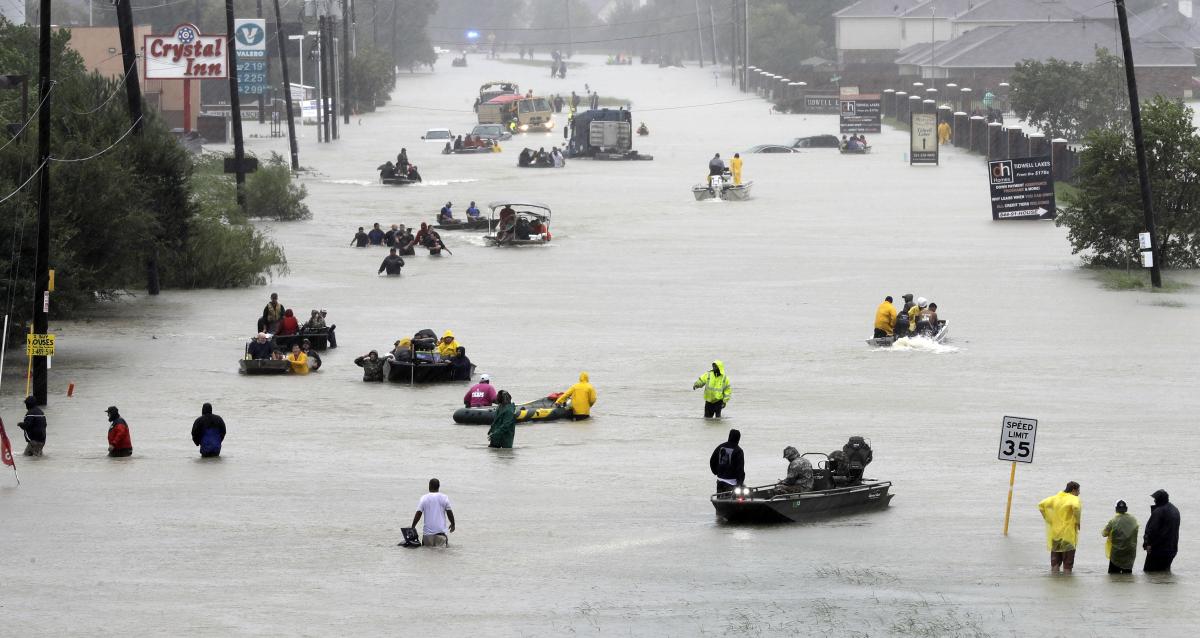
Americans and people around the globe are grappling with increasing incidence of extreme weather, from flooding to droughts. Now, funded by a three-year, $1.9 million joint grant, the Awareness Against Health Threats of Extreme Weather Events (AWARE) project will unite University of Maryland researchers with partners from Nepal, India, Vietnam, Indonesia, Taiwan, the United Kingdom and South Africa.
The international consortium is led by Dr. Amir Sapkota, professor and chair of the Department of Epidemiology and Biostatistics at the UMD School of Public Health, whose team has developed the international partnership over the past several years. Sapkota’s previous research piloted the study team’s approach, using AI to predict diarrheal outbreaks.
“Scientific data suggest extreme weather events will continue to increase in the near future, despite current mitigation efforts,” Sapkota said. “As such, there is an urgent need to use science and technology to develop tools that will help communities anticipate, prepare for and respond to the health threats posed by these extreme events.”
Other UMD colleagues, including Dr. Ronald Yaros (Philip Merrill College of Journalism), Drs. Huang Lin and Pin Wang (School of Public Health) and Hao He (College of Computer, Mathematical, and Natural Sciences) will collaborate with international partners to design and refine a mobile app for the early warning system. By integrating weather, health and demographic data, the system will provide timely, actionable information to public health agencies, non-governmental organizations (NGOs) and local leaders.
“This project will translate complex scientific data into practical tools that communities can use to save lives,” said Yaros, an associate professor at UMD. “By working across disciplines and borders, we can ensure the results reach the people who need it most.”
The AWARE project aims to strengthen community resilience in regions most affected by extreme weather events, reducing disease burdens and preventing health crises before they occur. Though the project will begin with a focus on predicting and preventing diarrheal disease, the team hopes to extend the focus to other climate-sensitive diseases including dengue later on.
AWARE is funded by a joint grant from the U.S. National Science Foundation and Future Earth (U.S.), United Kingdom Research and Innovation, National Research Foundation (South Africa), the National Science and Technology Council (Chinese Taipei) and the Belmont Forum Collaborative Research Action.