
COLLEGE PARK — As Americans prepare to vote in the Nov. 3 midterm elections, new research from the University of Maryland suggests political distrust may be motivating some citizens to become more engaged rather than driving them away from democratic involvement.
A study by the University of Maryland’s Philip Merrill College of Journalism, funded by the university’s Maryland Democracy Initiative, found residents interviewed in Frederick County, Maryland, expressed deep frustration with politicians, skepticism toward news media and anxiety about the future of the American Dream. Yet many remained committed to voting, volunteering, following local news and holding elected officials accountable.

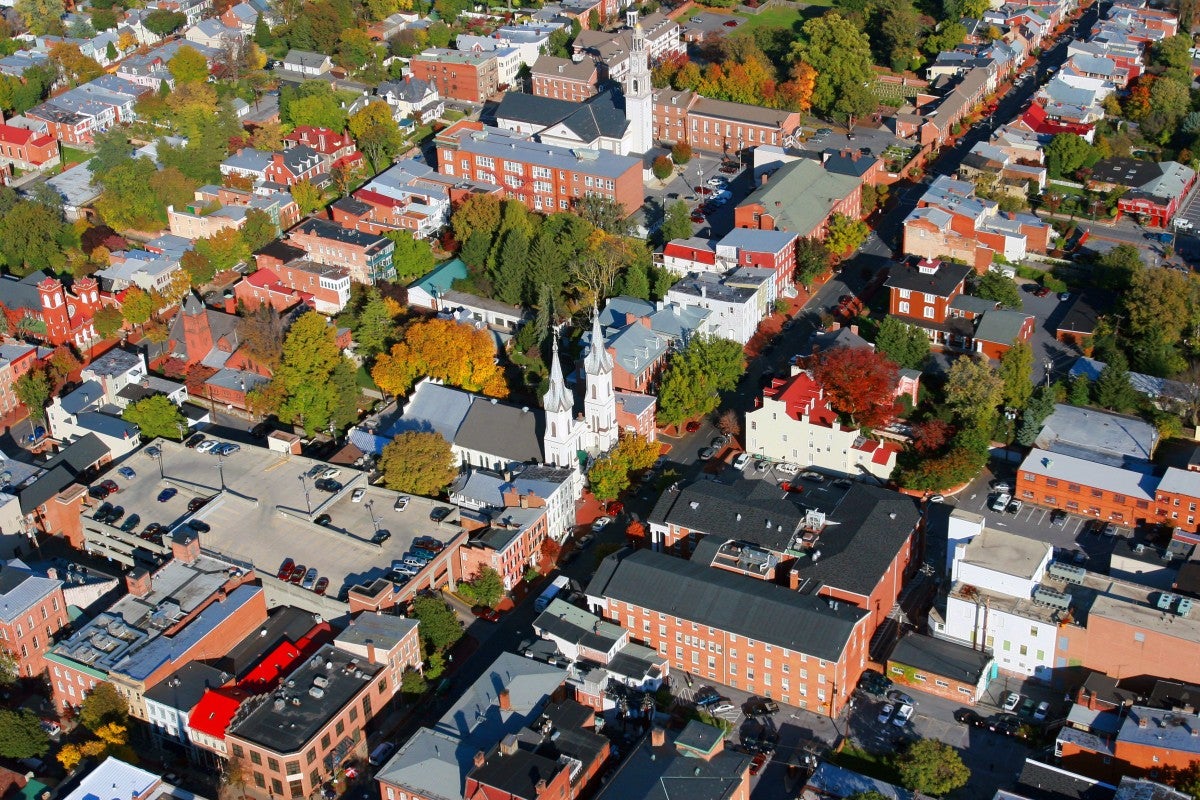
Frederick County offers a revealing setting for understanding political divisions as a “purple” county — one of Maryland’s most evenly split electorates between Republicans and Democrats. The county supported Donald Trump in the 2016 presidential election with 47% of the vote but favored Kamala Harris in 2024 with 53% of the vote.
Conducted by researchers Jodi McFarland Friedman and Sarah Oates, the study involved in-depth interviews with 18 Frederick County residents from April through June 2026 about how citizens experience American democracy. The researchers chose to do in-depth interviews in order to explore issues at a time of change and division in U.S. society. While useful, surveys often don’t reveal important nuances in how Americans navigate news, community and democracy.
The study identified a significant challenge for researchers seeking to understand political polarization: recruiting conservative participants. Despite extensive outreach, 16 interviewees reported voting for Harris in 2024, compared with two who voted for Trump. The researchers caution that their qualitative findings are not representative of Frederick County voters overall.
“We found the response of Frederick County citizens to reflect civic vigilance rather than political apathy — and that’s important to note as voters consider candidates and issues in the 2026 midterms,” Oates said. “The difficulty in engaging with Trump supporters suggests their views remain undercounted by pollsters and others.
“Although Democrats express worry and skepticism, they view political engagement as important. But with little contact with Republicans, it’s impossible to gauge their views on democracy and voting.”
Among the study’s key findings:
- Journalism remains essential despite widespread criticism. Residents expressed frustration with perceived media bias, sensationalism and declining news quality. Nevertheless, they continued to rely on local journalism, particularly The Frederick News-Post, to understand community affairs.
- Local issues can transcend national partisan divisions. Controversies over data centers, rapid development, farmland preservation and government transparency generated particularly strong reactions. One resident described development disputes as “the battle for Frederick’s soul.”
- Local politics inspire more confidence than national politics. Participants generally viewed local officials as more accessible and accountable, although concerns about corporate influence and immigration enforcement complicated that trust.
- The American Dream remains powerful but increasingly uncertain. Many respondents worried that younger generations would struggle to achieve the economic security and opportunities available to their parents.
The findings suggest the 2026 midterms will be shaped not only by national partisan loyalties but also by voters' judgments about government accountability, economic opportunity and the future of their communities.
“The interviews illuminate an important dimension of contemporary American politics: Even citizens who remain committed to democratic institutions believe those institutions require increasingly active scrutiny. Yet, this has not turned them off to politics. Rather, they remain engaged and committed to American democracy,” Friedman said.
The full report is available here.
About the Study
“News, Politics and Trust in an American County: Choosing Civic Vigilance Over Apathy in Challenging Times” was funded by the Maryland Democracy Initiative (MDI) at the University of Maryland, College Park.
Contact:
Dr. Sarah Oates
Professor and Senior Scholar
Philip Merrill College of Journalism
University of Maryland, College Park
soates@umd.edu
Dr. Jodi McFarland Friedman
Lecturer in Communication Studies
Gettysburg College, Pennsylvania
jfriedma@gettysburg.edu
About the Maryland Democracy Initiative
The Maryland Democracy Initiative is a University of Maryland Grand Challenge project that grows the capacity of all people for a lifetime of civic participation to strengthen our shared democracy. It accomplishes this through innovative, interdisciplinary, community-centered research, teaching, learning and civic engagement. MDI's work addresses key priorities to protect democracy including inclusive voting and trustworthy elections, civic literacy and democratic engagement, and informed communities, technology and news.