
Introduction
One of the most pressing problems weakening the local news ecosystem has little to do with revenue or technology. The problem is the journalism itself.
Much of what made newspapers, radio newscasts and TV news programs indispensable to people in the 20th century was not the journalism but what surrounded it. You couldn’t know what movie to see or TV show to watch without the listings, or how your stock performed without the agate. You couldn’t sell a bike or buy a house or rent an apartment without the classifieds; or be sure it might rain without the TV or radio weather forecast. Today, however, people can find nearly all that elsewhere.
Journalists, meanwhile, thought little about how their stories actually helped people live their lives or improve their communities. We journalists tended to dismiss that kind of work as a lower category of reporting. We called it “service journalism” and some of us even derided anything celebratory as “puff pieces.” Many journalists imagined their only true calling, and their highest, was to act as a watchdog looking for what was wrong — doing “accountability journalism” that monitored the powerful. In truth, however, this was a limited and constrained vision of the media’s role.
As journalism scholar James Carey noted two decades ago, “We developed a journalism that justifies itself in the public’s name but in which the public plays no role, except as an audience, a receptacle to be informed.” The public was a passive bystander in a dialogue between official institutions and reporters.
Today, that constrained vision of journalism’s purpose is unsustainable. For local journalism to survive, and for the press to live up to its constitutional responsibilities, journalists must make the public the focus of their work, not a bystander to it. In a world where the customers, not advertisers, will finance much more of the journalism they consume, the journalism itself must be indispensable.
In short, the news industry must shift from a journalism of attention, to a journalism of value.
This report from the University of Maryland’s Philip Merrill College of Journalism will explain how news organizations can begin to do that – to create journalism that is more actionable, useful and indispensable. In other words, journalism for the 21st century, not journalism for the 20th.
The work is funded by Merrill College’s Local News Network, the Employing Artificial Intelligence to Improve Journalism Grant Program — which funds AI research at the college — and the Lucy Dalglish Media and Democracy Endowed Faculty Support Fund in Journalism. LNN is funded by the Andrew and Julie Klingenstein Family Fund. The AI program is funded by the Scripps Howard Foundation.
The first step in shifting journalism’s sense of purpose from attention to value is to track and assess one’s journalistic work by a calculation newspeople have not traditionally considered but is essential to innovation: in what way is each story or piece of information or content actually helping anyone?
How might the audience put this information to use? Or, put another way, what job is it doing for them?
That concept was articulated most clearly by the visionary management thinker Clayton Christensen, who studied disruptive innovation at Harvard Business School. Christensen is most famous for his book, “The Innovator’s Dilemma,” which explains why many older institutions fail to innovate and often fail.
But one of his most important concepts is one he called “The Job to Be Done.” The idea calls on the producers of any product or service to understand how people are using a product — which may be different than what the producers imagine. To do that, news organizations must truly listen to the audiences they serve to understand their changing behaviors, their lives and their needs.
In the field of news, a small but growing cohort of news organizations — from The Atlantic to the BBC — have adapted the concept of the “job to be done” to make their journalism more valuable and useful to people. Some use the terminology “user needs” or “audience needs” to describe the concept. By whatever name, the results in the news field have been striking. A BBC World Service study of its own work, for instance, found 70% of its content fell into the “job” category of simply “updating” people. Yet those stories accounted for just 7% of its audience's attention.
How can news organizations identify the jobs people in their particular community need the news to do for them? How can news organizations improve their product by expanding beyond the older and more constrained vision of the public as a bystander? Or, to put it in business terms, how do disrupted industries get to know their customers so well they can improve and even reinvent their product?
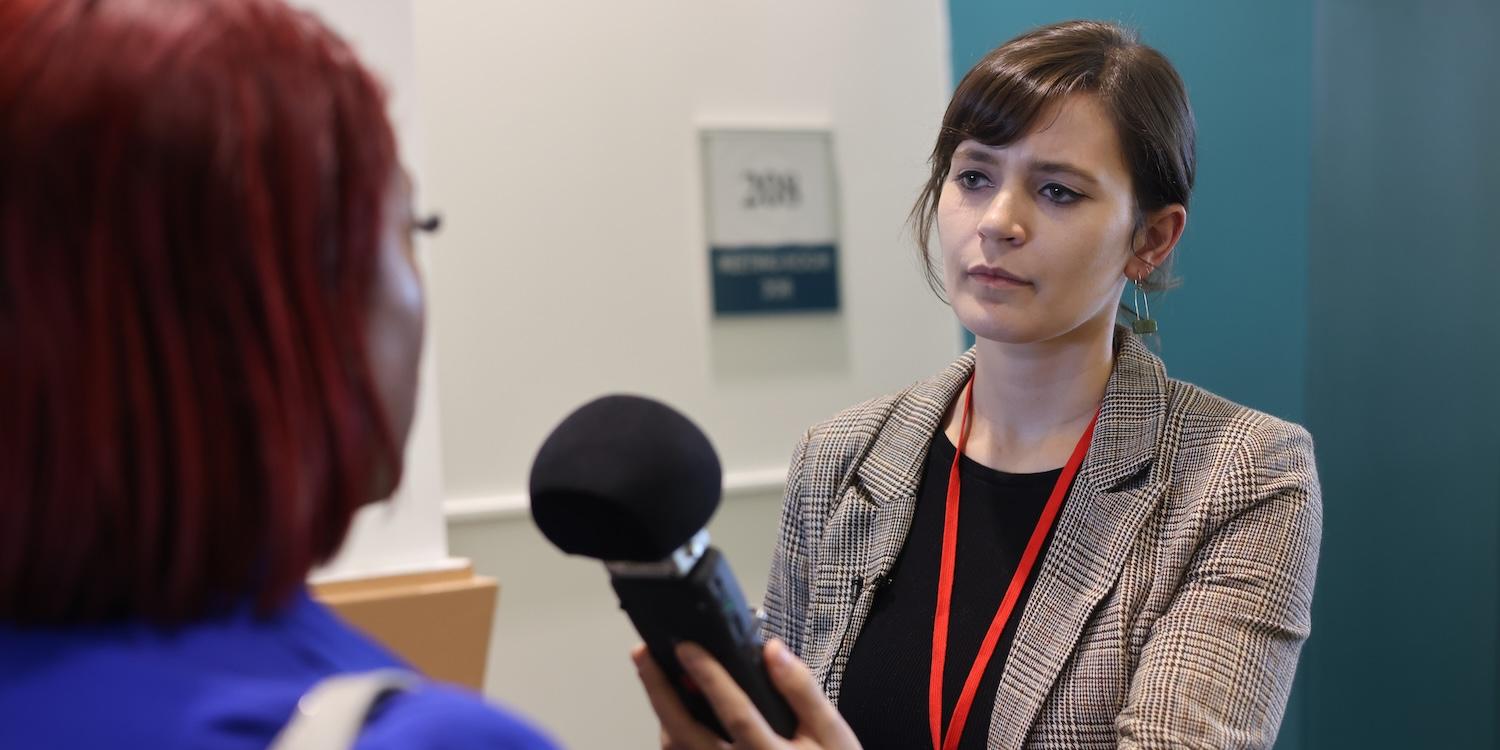
At Merrill College, we undertook such an effort in Maryland. We created a team of faculty, students and four local news organization partners. We contracted with an expert in the field of human-centered design (HCD), sometimes called design thinking. HCD research prioritizes deep listening and empathy, seeking to understand the world from the perspective of the people being served. Unlike traditional market research, it is not designed to be statistically representative or to predict outcomes. Instead, it pursues a deep understanding of a small number of distinct individual perspectives — including those with the most extreme or illuminating views — as a way to surface latent needs, identify opportunity spaces, and generate insights that can be tested and applied more broadly. This approach to research, also called “needfinding,” borrows its methods from the social sciences — ethnography, in-depth interviews, field observation — and is often used in the context of product and service innovation. Over several months, we recruited and conducted deep-dive, open-ended interviews with a wide range of Maryland residents across regions of the state and different ages, ethnicities, professions and news behaviors — 17 in total. Each was selected for a range of diversity in perspectives: age, geographic location, race, education, political affiliation and news consumption habits, to name a few. We then worked carefully through the videos, transcripts and our notes, looking for patterns and subpatterns that emerged across the group.
In the report that follows, we will offer three sections or types of findings.
The first section explores what the words “local” and “news” mean to people — which is different from how journalists may think about it.
The second category of findings identifies some realities about Maryland as a state and place, realities that influence what people need from news.
The last section of the report identifies six jobs that we heard in our research that people need the news to do for them. These jobs or “user needs” are in addition to the job that most news organizations typically think about — alerting people to a new breaking news event (this just happened), or updating them about an ongoing story that was already in the news.
What others have found, when they begin to focus their journalism around needs, is news organizations do too many alert/update stories of marginal value and too few that meet larger needs.
Those six jobs we identified from our design research are:
- Give me agency over what’s happening
- Give me the long view to understand Maryland today
- Help me see the invisible systems shaping people’s lives
- Give me the street-level view
- Help me navigate right now
- Help me engage with what’s great about Maryland
The audience for this report is broad.
First, we hope people working in newsrooms will grapple with the ideas here. The most important insight we hope news people take from this is news should do more than alert people or grab their attention. More of your journalism should help your audience. News should be actionable information, not merely information. It should arrive in a form people will notice and consume, in a time frame that is useful to them.
In a sense, we must begin to think all journalism is service journalism.
To do that, we need to begin to understand and track what job or service each story, chart, map or piece of content does. Only then can we begin to understand how our audience uses our product. Only then can we begin to create journalism that is indispensable.
Second, we hope people in newsrooms take the jobs we have identified and try them out in their communities. Build stories that meet these identified needs. See how they do. Track them. Our fondest wish is you build these jobs, or others you might refine for yourself, into your content management systems, as you do so much other information, so you can properly track them as data, not just one-off anecdotes.
Third, we hope the ideas in this report might be the beginning of conversations in communities. Gather people to events. Discuss the needs we have identified. Get people in your communities to react. In the course of those conversations, you might gain more understanding of the needs of people locally. Maybe they deepen the categories we have created. Maybe you will alter some, or add a new one or two, to address the particulars of your communities.
For non-journalists, we hope the notion of journalism as service, and the audience as the focus of journalism rather than a passive bystander to it, creates a sense of partnership with local news publications. As you will see when you read the following, particularly the concept of how to take news to the level of a person’s particular street involves growing participation of the community in making informed spaces.
A note about the interviewees: To protect their privacy, all interviewees have been given pseudonyms; other identifying characteristics — including age, race, ethnicity, gender, occupation and location — have been preserved.
Definitions
Across the interviews, the definition of news was personal, functional, rarely institutional — and thus rarely the way newsrooms define it (especially when monitoring governmental or public agendas). Instead, people we interviewed described the news through the lens of utility to their own lives rather than as a civic product.
- News is actionable, practical information: Information that helps you navigate your day.
- “If they tell me there’s a water main break on a certain road, I will stay away.”
—Elena, 43, Berwyn - “Anything that’s important to me or other people … that would help them out or let them know what’s going on.”
—Wayne, 66, Cumberland
- “If they tell me there’s a water main break on a certain road, I will stay away.”
- News is information plus context: Trey, a 41-year-old Silver Spring law professor, offered the most articulate definition. He said news isn't just raw information — it needs analysis and context. He distinguished between a sports tweet that merely tells you a score faster, and reporting that helps you more fully understand something: "News has to be both a mixture of facts as well as helpful analysis of context … information with relevant context."
News is personally scoped: Hank, a riverkeeper in Upper Marlboro, had the most expansive take: "News is information that is relevant to the person who hears it, and so that's a movable feast. It varies. News is very different to people depending on who they are and what they're focused on." Mateo, an Annapolis policy worker said news is shaped by whether it affects your finances or work: "You're either financially tied to it or it's helping you."
No two people in this study defined "local" the same way, and almost none of them define it by administrative boundaries — the way newsrooms often or usually do.
That gap — between how jurisdictions are drawn and how people experience place — is the central geographic problem for any news or information product in Maryland.
When we asked 17 Maryland residents to define "local," we got 17 different answers — and not one of them was "my county."
“Local” was rarely defined by geography alone. People constantly tied it, instead, to belonging, relevance and personal stakes.
Several people mentioned local TV news. Hannah, 40-year-old mother of four from Hyattsville, for instance, said local news feels like "there's always someone being murdered, but it's not really that local to me." Two others, 36-year-old Whitney from Baltimore and Trey, from Silver Spring, noted local TV news is dominated by sensationalized crime. All pulled back from local TV specifically because the coverage poisoned their perception of where they lived without providing useful information.
- Local is my sphere of personal influence or impact.
- "Local means this is something I can affect. I can help make a difference here."
—Marlene, an 85-year-old retiree in Oxford - "Anything within the circle of influence where you operate day to day. It's near enough to be influential on your behavior or on your information needs."
—Hank, an Upper Marlboro riverkeeper in his 60s - "Where my parks are … where my friends are … somewhere where I don't have to drive everywhere."
—Elena, a 43-year-old Berwyn resident
- "Local means this is something I can affect. I can help make a difference here."
- Local is connected to identity and cultural membership. For Leah, a 44-year-old Lusby waterwoman, local isn't a geography at all: it's a community of people who share a way of life. "I always think about what is not local. What is not local is somebody that doesn't tolerate our way of life … people that know how to cook their own crabs, they know how to steam oysters." For her, local is about generational rootedness in a place and its traditions.
- Local is a series of concentric rings. Trey, the Silver Spring law professor, saw local as "the whole DMV area" — anywhere he could reach if he wanted. Wayne, the Western Maryland resident, defined local as a "tri-state area" (Maryland, Pennsylvania, West Virginia). These definitions expanded and contracted depending on how embedded someone was in a specific community versus a broader region.
Local is what's missing. Mateo, from Annapolis, noted that local news is concentrated in wealthy or attention-grabbing areas, and that South Prince George's County has had no one reporting on it.
The Maryland local landscape:
Fragmented news geography, shared information gaps
Three basic realities about Maryland as a place shape what kind of news and information the state’s residents need. These structural realities about Maryland came up repeatedly in our interviews with residents, regardless of where people lived, their age or political orientation. Those three realities, which influence the Jobs to Be Done, are: the state is geographically fragmented into five places; despite those differences, several systems cut across these five regions; and the state’s proximity to federal power. Together, they define the conditions Maryland residents are living inside, and they explain the gap between what people here need from local news and what they are getting.
We outline each reality and its implications below: the five Marylands, the systems that link them and the pull of federal Washington. The six Jobs to Be Done in the next section are all influenced by these realities. Any outlet serious about doing them well will need to make a deliberate choice about each.
Maryland is not one place to its residents; it’s at least five. The DMV corridor, Baltimore City and its ring, the Eastern Shore, Southern Maryland and Western Maryland operate as distinct worlds with different economies, demographics, politics in many cases and rhythms of daily life.
We heard this directly from residents regardless of where they lived:
- "I grew up in the county and in the city, like elementary and middle school. … Most of it. There's different parts of Baltimore — and they're different worlds, even within Baltimore."
- “Many people think of the Eastern Shore as a separate state altogether. It's just a different world.”
- "Silver Spring is a kind of a taste of the city without being in the city."
- "I don't really know much about other parts of Maryland. I just know I love Cumberland and Western this part."
- In Lusby (Southern Maryland), a waterwoman says her community is actively resisting suburban growth: "Our county commissioners try to keep the area really rural. … You could go to sleep coming down that highway, which I kind of like."
The state's news infrastructure is largely organized around two of those five worlds: Baltimore and the Montgomery County corridor. The result is a narrowed ecosystem serving the center while the periphery builds its own information systems or goes without. Each of the six jobs in the following section has to be done at the scale of the place where residents live. An outlet built primarily for Baltimore or the corridor cannot do these jobs for the rest of Maryland merely by extension.
Implication: Every news organization in Maryland is making a geographic bet, whether it knows it or not. The question is whether that bet is explicit or implicit.
The most consequential things that happen in Maryland don't respect county lines. The Chesapeake Bay watershed, the regional power grid, the federal workforce, the agricultural economy, the public health burden and the immigration enforcement landscape all cross jurisdictional boundaries and connect communities that otherwise share little. These are also where some of the most consequential decisions get made, often invisibly to the people most affected.
The Bay — which crosses every boundary in this state — is the clearest example. It links communities that would otherwise never appear in the same story. For example, a waterman's livelihood in Lusby, the work of a Patuxent riverkeeper and the crab pots that go into the Solomons Christmas tree each December. The same logic applies to the Piedmont transmission line cutting through Western Maryland farmland, the federal contracting decisions reshaping Annapolis and the ICE activity a resident tracks block by block in College Park. None of these stories fit inside one county, and many are getting covered as the systems they are. Maryland journalism mirrors the political map instead of the systems map.
Implication: The most underleveraged beats in Maryland are those focused on systems — i.e. coverage organized around watersheds, grids, labor markets and enforcement footprints rather than counties. Doing it well requires sourcing from working watermen, independent scientists, federal workers, immigrant communities and farmers, not from the institutions and advocacy groups with a fundraising or political stake in the framing. The audience for that work spans the entire state.
Few states are as structurally entangled with the federal government as Maryland. Federal employment is one of the state's largest economic sectors. Federal contracting underwrites local economies from Lexington Park to Aberdeen. Major federal agencies — NIH, FDA, NSA, NASA Goddard — sit inside the state's borders. Immigration enforcement plays out here directly, including a proposed detention center in Washington County. Policy debates and agency decisions in Washington reach Maryland communities not as distant events but as immediate, personal change. As an Annapolis resident, a public policy worker, put it, "Different parts of Maryland are dealing with different consequences of federal workers being sent home or fired or furloughed — that's very specific to this region."
This entanglement creates a distinctive information condition. Marylanders are surrounded by coverage of federal action and yet often disconnected from coverage of what that action means for them. The federal policy story is well covered (by The Washington Post, national outlets, regional television). The state policy story is covered by only a few outlets, particularly the nonprofit Maryland Matters. But the personal story — what federal workforce cuts mean for a Lusby service business, what an ICE arrest means for a College Park household — sits in a gap that outlets do not consistently fill.
Implication: Maryland has world-class federal coverage. What it lacks is journalism that follows federal and state decisions into the neighborhoods where the consequences land — the most distinctive accountability beat available here, because it is also the most distinctive thing about being a Maryland resident.
Jobs to Be Done
The Jobs to Be Done framework asks a basic question: when a Maryland resident turns to a local news source, and then to a particular story or piece of information, what are they trying to accomplish? What is their need? They are not just "consuming news." They are doing something more specific. Are they deciding whether to move? Are they trying to figure out what a council vote means for their street? Or make sense of why the water bill keeps going up?
The six jobs below name those purposes in participants' own terms. Some are universal; others are distinctly Maryland, shaped by the state's geographic fragmentation and the pace of change in specific places. Taken together, these jobs suggest a repositioning for local news organizations: from reactive content producers to proactive platforms that help residents anticipate, understand, navigate and feel connected to what’s happening in their communities.
Please note, these six conceptual Jobs to Be Done, drawn from our research, are in addition to another category of story or content: content that simply alerts people about an unfolding new event or provides incremental updates about developments on ongoing stories. These might be called Alert/Update stories. Sometimes that kind of reporting is necessary. But too often journalists think merely alerting and updating people is enough. The key concept here is to make journalism more useful for people, journalists need to think beyond that basic function. Newspeople need to be mindful and intentional about how a given piece of content helps residents — or, using this framework, what “job” it does for them. Sometimes, that may mean changing how you report and present what might have previously been merely an update. Sometimes it means doing stories you would not have thought about before — filling more needs than before. Sometimes, frankly quite often, it also means skipping a simple update story because you have more valuable work you should be doing instead.
This is content that helps people see what’s coming before it’s too late for them to do anything about it
Across rural, suburban and urban Maryland, participants described a consistent pattern: by the time a decision surfaces publicly, the window to act feels like it has already closed. The underlying information may be sitting in posted agendas, zoning dockets and commission minutes. But it’s often not surfaced for the public while there's still time to do something about it. Maryland's structure compounds the problem: 23 county governments, Baltimore City, and hundreds of municipal and regional bodies generate consequential calls at a pace no outlet covers end to end. Residents need coverage of what's coming while there's still room to show up, weigh in or push back.
In Their Words
"My number one is — what infrastructure changes, what building changes, what signs of growth are there in the community? Is that data center really going to be built? It was such a beautiful piece of property."
—Leah, 44-year-old seafood business owner and part-time waterman, Lusby
"The superintendent moved forward on a budget plan that would include shutting down our two neighborhood schools that our kids have grown up in. A lot of younger parents weren't necessarily on top of that. I knew about it and told people — I just have more capacity these days to keep up with some of that stuff."
—Trey, 41-year-old law professor and father of two teens, Silver Spring
"I would like to know more about what the city council is doing, what the county is doing. I don't think I have any knowledge about what the county government does."
—Hannah, 41-year-old mother of four who works for the federal government, Hyattsville
"There's a big stink in Baltimore, Carroll and Frederick County about the Piedmont reliability project. … They want to put it right through farm ground, beautiful farm ground. And Baltimore Gas and Electric never even got to bid on it."
—Owen, 70-year-old retired farmer, Flintstone
"Changes in laws, taxes, elected officials, constructions — what's being built, what's being torn down, what may be coming. If something is going to impact my commute, or impact my paycheck, those are the things I try to stay on top of."
—Whitney, 36-year-old military veteran, who moved back to Baltimore City
What Kind of News and Information Does This Job?
To begin with, this is content reported and presented in both format, and time frame, that lets people do something about it and provides the information they need to decide whether they want to get involved. In short, this job involves making information “actionable.” If something is moving through the legislature or the town council or the zoning commission, don’t just report on it. Tell people what the actual effect would be and do it in a time frame that people who care could act. Giving people agency also means moving beyond just telling people what’s wrong. If people, groups and institutions have begun to address those challenges with potential solutions, that is vital information community members should have as well. Without it, journalism is incomplete.
Put in the most concrete terms, what kinds of news and information are likely to fit this category? A good deal of, but not all, accountability reporting of institutions might fit here. That includes reporting on legislatures, local civic councils, some courts and crime stories, coverage and information about education and schools, and coverage of real estate development, public works projects and local business and economics. This also includes a good deal of investigative reporting. Some coverage of these civic and institutional topics will inevitably be simply “update” stories — a separate category from our more conceptual six Jobs to Be Done. But far fewer of them should be than probably are now. The essential concept is this: much more of what we think of as accountability journalism should be viewed through the lens of how and when it can equip people to be civic actors, not mere bystanders.
Editorial Ideas
- Shift from covering outcomes to covering decision points
- Build a recurring “what’s coming” report across key local systems
- Treat agendas, permit filings, budget drafts and comment periods as sources for story ideas
- Make “is there still time to act?” a standard reporting question
- Translate public process into plain language: what’s proposed, who’s affected, what happens next
- Follow major issues from early signal to final decision
Product Ideas
- Create “what’s coming” trackers by place and topic
- Build deadline-driven alerts for hearings, votes and comment periods
- Organize coverage by resident impact, not government structure
- Add a standard utility box: Why this matters / What happens next / How to weigh in
- Develop recurring meeting previews and decision calendars
- Let users follow topics like housing, schools, transit, development and taxes
And Think About …
- How to design coverage in ways that surface what’s coming (everything from permit applications, commission agenda items, public comment periods and more) at the moment residents can still act on them
- How to make the public process feel legible and usable to people without insider knowledge
- How to help residents track what matters without needing to monitor dozens of public bodies
- How to identify and prioritize the earliest signals of meaningful community change
This is content that surfaces the history, context and lived experiences of this place to explain why things are the way they are — and why change can feel so charged
Across Maryland, residents described a quieter but equally important information gap: people often lack the historical context and lived knowledge needed to understand why their communities are the way they are now. In many places, that knowledge exists — about pollution, land use, industry, loss, disinvestment and local decision-making — but it lives in memory, oral tradition and community networks rather than in journalism that people can easily find, use and share.
This gap is especially visible in communities where longtime residents feel the place they know changing around them. New development, new neighbors, rising costs, shifting politics and changing cultural norms can create anxiety that the “old way of life” is disappearing. At the same time, newer residents often arrive without access to the deeper story of the place they are entering. As a result, current conditions and the news about these places often appear disconnected from the forces that produced them. Residents need coverage that brings together history, context and lived experience so they can make sense of present-day debates, understand what has shaped their community and see today’s decisions in the context of what came before.
In Their Words
"I think a lot of times when somebody publishes something, they don't understand how it affects everyone. … They [media outlets and advocacy groups] had no baseline for that data. There was no 1% of what. And yet that phrase just seems to stick — always followed by 'due to overharvesting.' That's not what wiped out the oysters. But we're battling that narrative all the time."
—Leah, 44-year-old seafood business owner and part-time waterman, Lusby
"There's so many people that do live in our community that have no clue what they're even living in, whether it's good or bad."
—Stephen, 45, lifelong Curtis Bay resident
"Being from here, leaving and coming back, and seeing that things haven't really changed, and they've gotten worse."
—Whitney, 36-year-old Baltimore native who moved back after military service in Texas
"My dad bought our farm in 1960. Originally it was an orchard planted back in 1911, 1912 and 1913 — over 7,000 trees on top of the mountain. The packing shed burned down in a snowstorm in the ’50s, the trees wore down and bit by bit we cleared them out for cattle. Now there's two or three trees left out of the 7,000 original."
—Owen, 70-year-old retired farmer in Flintstone
What Kind of News and Information Does This Job?
The job to be done here is to give people a deeper sense of the past that explains the place they live in the present. While journalists often tend to think news is only what’s new, people in Maryland told us strongly that understanding how the past explains the present is also valuable. How did this neighborhood, which is now beleaguered, get to be this way? Why is this park named after that person? What is the history of that neighborhood next to the stadium? What was the farm that used to be where all that construction is going up? A good deal of the content and product you create here can have evergreen value for audiences.
In its most concrete terms, what kinds of reporting would fit here? Stories about history belong here. Some (but not all) obituaries might as well. So does coverage about real estate, business and economics if it is primarily providing historical context. This job also reveals how important news archives have become in the modern media ecosystem. News used to be more ephemeral, disappearing with the end of a broadcast or the tossing of yesterday’s newspapers. Today, people have the capacity to seek answers to their questions whenever something becomes relevant to them. So one job for news organizations is to make their archives easily accessible and searchable, and to highlight content from the past as it becomes relevant again.
Editorial Ideas
- Treat history, memory and lived experience as core reporting inputs, not background color
- Build coverage that connects present-day conditions to their causes
- See communities as holders of knowledge, not just sites of impact
- Create stories that challenge flattened, inherited or misleading local narratives
- Pair accountability and breaking news with historical and place-based context
- Invest in stories that capture a sense of place, generational change and community memory
Product Ideas
- Build place guides that explain how a community became what it is today
- Create story formats that connect past events to current decisions
- Develop searchable timelines, archives and issue pages rooted in local history
- Capture and organize oral histories, resident memories and community testimony
- Add recurring context modules: How we got here / What happened here / Why this matters now
- Let residents explore Maryland through community histories, not just headlines or topics
And Think About …
- How to create a local information experience that helps people see Maryland with a longer timeline and richer context
- How to connect present-day debates to the policies, industries and decisions that shaped them
- How to treat overlooked communities as sources of historical knowledge, not just subjects of need
- How to preserve and surface local knowledge that currently lives only in oral tradition and community networks
- How to make archival material part of journalism's daily output — not a special project but a default ingredient in how stories get told
This is content that explains, and sometimes exposes, the hidden forces, structures or systems that affect people’s lives in ways they usually don’t see
Many of the forces shaping life in Maryland are hard to recognize while you are living inside them. Residents may feel the effects — in their water bills, health, land, air, commutes or ability to make a living — without having a clear way to understand the larger systems driving those outcomes. The Bay watershed, power grid, industrial footprint, farmland economy and public health burdens connect places that may seem unrelated on the surface, crossing county lines and linking communities that do not always know they are part of the same story. Yet, for many reasons, journalism often mirrors political and geographic boundaries rather than the systems themselves. Residents need coverage that makes these structures visible: explaining how they work, where power sits, how decisions in one place affect people elsewhere and what these systems mean for everyday life.
In Their Words
"The disconnect is something that the industries and a lot of people [who] are bad actors play on. We fight for something that we shouldn't have to fight for, which is the ability to live in a community in peace and happiness and to be able to breathe clean air and have clean water."
—Stephen, 45, lifelong Curtis Bay resident
"I went to the attorney general of Maryland and asked for his assistance enforcing the Safe Drinking Water Act. He said to me, to my face: I don't work for you. I work for state agencies."
—Hank, 60s, riverkeeper in Upper Marlboro
"They want to build solar farms on prime farm ground. Once those solar panels have [had] their 20-year life, you can't go back to farming it. They've screwed up the ground so bad when they build it that you can't go back to productive agriculture afterward."
—Owen, 70-year-old retired farmer in Flintstone
"Like when you bring mud into your home on your shoes — you don't know it's there, but eventually you've got a house full of mud. It's getting people to see that you track things in with you. It doesn't make it better, just makes it harder."
—Howard, 68-year-old pastor, Annapolis
"I've been focusing more on how people are feeling about vaccines. … I did work as a firefighter for a little bit, as an EMT, and I run into patients asking me questions about vaccines more and more, so I did have to become more versed in it. But I know a lot of misinformation happened with masks and stuff."
—Iris, 20-year-old premed student at University of Maryland, College Park
"You're seeing like the job reports and the federal government and different parts of Maryland, different parts of D.C., different parts of Virginia, are dealing with different consequences of federal workers, like being sent home or fired or furloughed or what have you. That's very specific to this region."
—Mateo, 28-year-old public policy worker, Annapolis
What Kind of News and Information Does This Job?
What are the long-term trends shaping the community that are often lost in the rush of daily events? And what are the forces that are driving those trends? Journalism often misses here: it is better at covering “news that breaks” rather than “news that bends.” But if news is the tip of an iceberg, what are the structures below the surface? What is under the radar, and what are the systems some people are pushing against or the hidden agenda other people are pushing for? That is the job to be done here. Sometimes covering news that bends can start by reconceptualizing beat structures. Instead of covering the transportation department, define the beat as how people get around. Instead of covering real estate, think of it as shelter. Devise coverage around the way people experience it, not how governments are structured to address it. At smaller news organizations, where reporters cover what once might have seemed like several beats, the opportunity also exists to reconceptualize. For example, a reporter who covers transportation and development could see his or her beat as "community change."
In its most concrete terms, what kind of reporting would fit here? Some stories about economic trends would, if they look over the longer term rather than, say, monthly or quarterly updates. So might some crime reporting that was trying to explain longer term trends. Or stories about real estate development trends that are not obvious. But it could be any kind of reporting that answers invisible questions — the part of the iceberg of news that sits below the surface. Why have people’s water bills gone up by more than 30% when fuel prices haven’t changed that much? Or what was the impact of that referendum passed a few years ago?
Editorial Ideas
- Organize coverage around systems people live inside, not just jurisdictions
- Treat the Bay, watershed, power grid, farmland and pollution burden as core reporting frames
- Prioritize stories that show how one decision creates ripple effects across communities
- Invest in trend and pattern reporting, not just event-driven coverage
- Surface the people closest to these systems — farmers, watermen, doctors, pastors, organizers — as key sources
- Cover the under-the-radar forces that shape daily life: health, environment, infrastructure, land, energy and work
Product Ideas
- Build system maps that show how places, decisions and consequences connect across Maryland
- Create explainers and trackers for major systems: water, power, land, pollution, health
- Organize coverage by system as well as by geography
- Develop recurring products that answer: What’s changing? Who’s affected? Who benefits? How are communities connected?
- Help users follow ripple effects across places, not just events in one location
- Create topic pages that combine expert explanation, lived experience and current reporting
And Think About …
- How to reveal the connections between communities linked by water, power, land, labor and pollution
- How to help residents understand where power sits inside these systems and how it operates
- How to reorient local journalism around the forces that quietly shape daily life, not just the events that briefly capture attention
This is content that translates decisions made in Annapolis and local government into clear, concrete consequences for people’s neighborhoods, public services and everyday lives
For many Maryland residents, the government feels both close by and hard to grasp. Decisions made in Annapolis, county government, municipal buildings, school systems and local agencies can shape daily life in immediate ways — from whether a road gets fixed to where money goes, what gets built, which services expand and how responsive public officials are. Yet the connection between those decisions and everyday consequences is often unclear. Maryland’s layered civic structure makes this harder: residents are expected to navigate counties, municipalities, boards, agencies and the state legislature, often without reliable coverage that tells them what matters where they live. The result is not just an information gap, but a relevance gap. Residents need coverage that translates public action into street-level meaning: what happened, who decided it, where the impact will be felt, who benefits, who bears the costs and what it means for my neighbors and me. At its best, this work makes government legible at the scale people experience it.
In Their Words
"I had to call my local office to find out if my candidate had won. They said, ‘Oh yeah, we did.’ Because there was no way to find out. Which is ludicrous."
—Sandy, 79-year-old retiree, Fort Washington
"Prince George's County has 27 municipalities. If you're interested in any single one, you have to know what you're looking for half the time. It's unfair for the onus to be put onto a local newspaper that puts something out once a month, or a sophomore who may or may not continue to have the beat."
—Mateo, 28, on College Park coverage
"They sat at the front of the room with microphones. Basically every time somebody asked a question, they said, 'No comment.' Not one person from the commissions came down, offered his hand and said, 'I know you're concerned, thank you for coming tonight.' If I was teaching a course on communications, all you had to do was bring in a copy of what happened there."
—Marlene, 85-year-old executive director of a county arts council on the Eastern Shore
"How they're spending all their money — I don't know where that money goes, what their projects are. Are they going to build that county community center? That was a plan, but I never hear any updates about it. Maybe there's things they're doing that I don't even know about that I can be benefiting from."
—Hannah, 41-year-old attorney and mother of four who has lived in Hyattsville since 2018
"Really for me, what affects my life right now is I'm looking to buy a house soon. So, like, the housing market, things like that, or my taxes, just certain information like that. … Things that actually pay off."
—Brian, 27-year-old Perry Hall resident
What Kind of News and Information Does This Job?
The job to be done here is to make information actionable at the level closest to where people live. Getting “hyperlocal” is a challenge if newsrooms only think about it in conventional coverage terms. But think beyond news as always being “stories.” Think instead about what information exists — from public data to local agendas — that affects people, or can help them live their lives. It might be stories that follow the money. Or it might be content that is not a conventional story at all, such as a breakdown of budgets of local governments into graphics and charts that users can search themselves. Or it might be a page for each neighborhood in a community, with phone numbers, contact pages. It could be AI tools that scrape interesting items from hyperlocal listservs. It might be links to local Facebook pages. Think of resources that help people where they live and work. Remember what people told us about how they define the word news and how they define the word local, and how that is different from how journalists often do.
Editorial Ideas
- Translate votes, budgets, ordinances and agency actions into daily-life consequences
- Treat “what does this mean here?” as a standard reporting question
- Build coverage around neighborhood and community-level impact, not just official action
- Surface the practical stakes of local government: services, projects, schools, roads, safety, taxes, development
- Follow through on public plans and promises, not just their announcement
- Find creative ways to cover the most local layers of civic life, including municipalities, boards and agencies that larger outlets often miss
Product Ideas
- Build place pages for neighborhoods, towns and small communities
- Create simple explainers for who governs what at the local level
- Add standard utility modules: What happened / What it means here / Who to contact / What’s next
- Develop trackers for local projects, public spending and promised improvements
- Aggregate useful hyperlocal inputs: agendas, notices, community updates, public data, service changes
- Design tools that help residents find relevant local information without already knowing where to look
And Think About …
- How to make local government feel relevant at the level of a block, school, commute or neighborhood
- How to translate official action into the specific consequences residents can see and feel nearby
- How to design forms of local information that do not look like traditional news stories
- How to help residents track whether public promises and projects reach their community
- How to define “local” the way residents experience it, rather than the way institutions organize it
This is content that gives people urgent, useful updates that help them move safely through their part of Maryland
Residents need timely, highly local information that helps them move through daily life and make decisions in the moment. This is not just a weather or traffic need, though it includes both. There is a broader need for real-time, practical information about disruptions, hazards, closures, enforcement activity and changing conditions in the specific places people are moving through every day. What matters in one part of Maryland may be irrelevant in another, and information loses value quickly when it is delayed, generalized or detached from place. Residents need coverage that is immediate, precise and useful enough to act on: information that helps them avoid danger, change course, prepare differently or decide whether it is safe to go at all.
In Their Words
"There was the whole UMD lice thing. I didn't know about it until I saw it on TikTok … because TikTok comes first, because it's such a fast algorithm. If you want to beat the news stations, you'll go there essentially."
—Iris, 20-year-old premed student at UMD, College Park
"Ring is easier for me. I like it because it's simple. With the ICE raids, they're like, 'I did see them on this street, or by the school.' You can see the hour that they put it in — if it was one minute, 30 minutes or one hour. So you can see if it's fresh information."
—Elena, 43-year-old Berwyn resident who provides translation services for Spanish-speaking members of the community
"We had, like, a bad flooding a couple weeks ago, maybe a month or two now — it hit all the local businesses down there on Main Street. So anything that was close to the water got, like, a bunch of water, just like, flooded into it. And, you know, local news picked it up, I think WTOP picked it up, Fox 45 probably did.”
—Mateo, 28, Annapolis
"I have this police chief's telephone numbers to this day on my phone, because he has always said, 'You hit a deer, you pull over, you call me right away.' He was the kind of guy that you could call if your dog was lost, and he'd help you find it."
—Marlene, 85, Oxford
"A watch would be fine, honestly. A watch that gives you alerts and stuff, or a beeper. Something where you don't have to go out and find it — it's going to send the important information to you."
—Brian, 27-year-old Perry Hall resident who describes himself as a news avoider
What Kind of News and Information Does This Job?
This is content that helps people in the moment. Thus, weather goes here, especially urgent weather alerts; traffic news, including construction projects; Amber and Silver alerts, and more. While some crime news may fit, spot crime stories with no real utility do not. Here is where being thoughtful about content like real-time alerts can make the difference between helping people or merely promoting your content. Think about using the “breaking news” label sparingly — and honestly. When news organizations send out “breaking news” alerts with content that is not in fact breaking news, they are not only abusing the term. People also notice it. It annoys them. And news organizations become the boy who cried wolf.
In the most concrete terms, what kind of information likely fits into this job? Weather, traffic, disasters, some crime stories certainly. But it could be anything that helps people in the moment, such as when local summer camp registrations open. One way of knowing what people need in the moment: monitor the local conversations taking place in non-official spaces, on social media or locally oriented Facebook pages.
Editorial Ideas
- Prioritize urgent, actionable updates over general awareness
- Treat safety and navigation as a core local service, not a side feature
- Focus on information people can use right now: closures, hazards, enforcement activity, weather, outages, disruptions
- Cover crime and public safety in a way where there is clear practical utility
- Report with extreme geographic specificity: where, when, how current and who is affected
- Build coverage around the real conditions people are navigating, not just official announcements
Product Ideas
- Build real-time local alert products by neighborhood or corridor
- Emphasize freshness with clear timestamps and status updates
- Let users customize alerts by location and type of disruption
- Create a utility-first live feed for weather, traffic, closures, outages and safety incidents
- Design for push delivery: alerts that come to people without them having to go look
- Combine official alerts with trusted on-the-ground signals, while making source and verification clear
And Think About …
- How to deliver urgent local information at the speed people need to act on it
- How might we design for hyperlocal relevance, so updates are useful in one person’s daily path, not just broadly true across a region
- How to build products that meet the need residents are currently turning to Ring, Facebook pages and group chats to fill
- How to treat safety, movement and immediate decision-making as a central local information job, not a peripheral one
This means helping people recognize, connect with and celebrate the communities, culture and experiences that create pride, belonging and joy
Residents want local journalism to do more than inform them about problems; they also want it to reflect the people, places, traditions and everyday experiences that make Maryland feel like home and connect with them. Across the state, people described a fierce sense of local identity and pride that formal news rarely captures — the rituals that define a town, the small businesses that hold a community together, the cultural life that gives people reasons to gather and the local gems outsiders never see. This goes beyond typical entertainment reporting or event listings: it’s about helping people see and participate in the communities, traditions and forms of local life that make them feel like they belong here. When journalism overlooks these things, it does more than miss feature opportunities: it reinforces a thin, often distorted picture of place. Residents need coverage that helps them engage with and enjoy where they live, discover what is worth caring about and see their communities reflected with specificity, affection and depth.
In Their Words
"Once you travel beyond certain corridors in Baltimore, you come across some of the most marvelous settings — Homewood and the parks and the falls, Jones Falls. And so as soon as I got here, it was easy to fall in love, because I look beyond the garbage and the neglect, and found the real gems."
—Howard, 68-year-old pastor, Baltimore
"When people think of Baltimore, they think of ‘The Wire,’ or just crime. Getting to show people the heart of Baltimore — the new businesses downtown, the ice skating rink at the harbor, the mom-and-pop shops that only locals know about — that's maybe only happened, like, twice."
—Whitney, 36-year-old Baltimore native, Baltimore City
"We build a Christmas tree out of crab pots in the center of town. We solicit community members to purchase nautical buoys — they pay $50 to get a buoy, paint it and hang it on the tree. The money goes to the Solomons Mission Center and to Calvert Safe Housing. It really is a sense of community. It gives me chills when we do it."
—Leah, 44-year-old seafood business owner and part-time waterman, Lusby
"At Christmastime, the community puts up dock trees on every single dock. When you drive into Oxford in the evening, what you see are all of these dock trees reflected on the water. It's absolutely beautiful. It is strictly a community project — whatever the divisions are, for this day, you leave that at home. This is what we do here."
—Marlene, 85, Oxford
"I have yet to learn to chant, mainly because — I've only been to the homecoming event like twice, but it is really, really interesting that everybody knows verbatim what the UMD chant is."
—Iris, 20-year-old UMD junior, who transferred in from Howard Community College during sophomore year
What Kind of News and Information Does This Job?
Journalists tend to think they help society most by pointing out problems to be solved. Celebrating what’s working is often overlooked. “The plane that crashes is news. The plane that lands is not.” Many people outside of journalism disagree. Instead of thinking journalism is only a watchdog, also think about helping people understand and recognize what’s worth celebrating about this place. This includes content that helps people know how to spend their time well, which could be restaurant reviews, stories of upcoming local festivals, plays, movies, music, culture. It also could be the story of an annual celebration that simply means a great deal to people. It might also include a searchable, clean and comprehensive community calendar, something that was once time consuming but technologies like AI now can transform into assets for news organizations.
In the most concrete terms, what kind of news and information belongs here? At the most basic level, news about local festivals, anniversaries, how to take advantage of local outdoor recreation and probably most local sports. So might obituaries that celebrate local heroes. And most reviews of restaurants, about cultural events. But the job is also deeper. It also involves helping the community understand the different communities and people of the region. If the Give Me the Long View (Job 2) is largely about history, this job, Help Me Engage with What’s Great About Maryland, is more about culture.
Editorial Ideas
- Cover communities of practice and identity, not just towns or neighborhoods: watermen, skaters, church groups, farmers market regulars, immigrant communities, youth sports families, artists, line dancers, boat people, etc.
- Treat joy, culture, tradition and local pride as core coverage areas, not soft extras
- Invest in stories that reflect the distinct identity of specific Maryland communities
- Cover how people spend their time well: festivals, performances, food, rituals, public spaces, neighborhood traditions
- Build coverage that helps residents feel more curious, connected and proud of where they live
Product Ideas
- Build community guides organized around affinities and ways of life, not just geography
- Build robust community calendars that are comprehensive and useful
- Design products that help users move from discovery to participation: not just what this is, but how to join, attend, show up, support
- Develop recurring products around weekends, seasons and community traditions
- Organize coverage around place-based discovery, not just event promotion
- Create ways to spotlight beloved local businesses, rituals and hidden gems
- Let users explore Maryland through culture, community life and local pride, not just news topics
And Think About …
- How to make community celebration and local discovery as central to the mission as accountability reporting
- How to reflect communities back to themselves in ways that feel recognizable, specific, and affirming
- How to help residents see more of what is worth loving, protecting and participating in where they live
- How to cover culture and community life without flattening it into generic lifestyle content
- How to help people not just live in Maryland, but feel more connected to and proud of being there
Credits
Merrill College Research Team Leaders: Sean Mussenden, Tom Rosenstiel, Krishnan Vasudevan and Jerry Zremski
Research Consultant: Tran Ha (Tiny Collaborative)
News Organization Partners: Jim Johnson (APG Chesapeake), T.J. Ortenzi (Baltimore Banner) and Kit Slack (Streetcar Suburbs)
Merrill College Researchers: Kathy Best, Chris Harvey, Marty Kaiser, Adam Marton, Christi Parsons, Daniel Trielli and Derek Willis
Merrill College Student Researchers: Ryan Bowie, Razak Diallo and Emely Miranda-Aguilar. Katelynn Winebrenner, a Merrill College student, also represented the Cumberland Times-News.