
COLLEGE PARK — The Howard Center for Investigative Journalism at the University of Maryland’s Philip Merrill College of Journalism collaborated with The Fuller Project to publish an investigation into the impact of natural disasters on the frequency of domestic violence.
The story — from Merrill College Fulbright Fellow Lisa Woelfl, Howard Fellow Greg Morton and The Fuller Project’s Jessica Klein — was co-published by The Fuller Project and The Texas Tribune on March 29.
The Fuller Project is a nonprofit focused on producing journalism centered on women, especially those facing racial or other forms of bias.
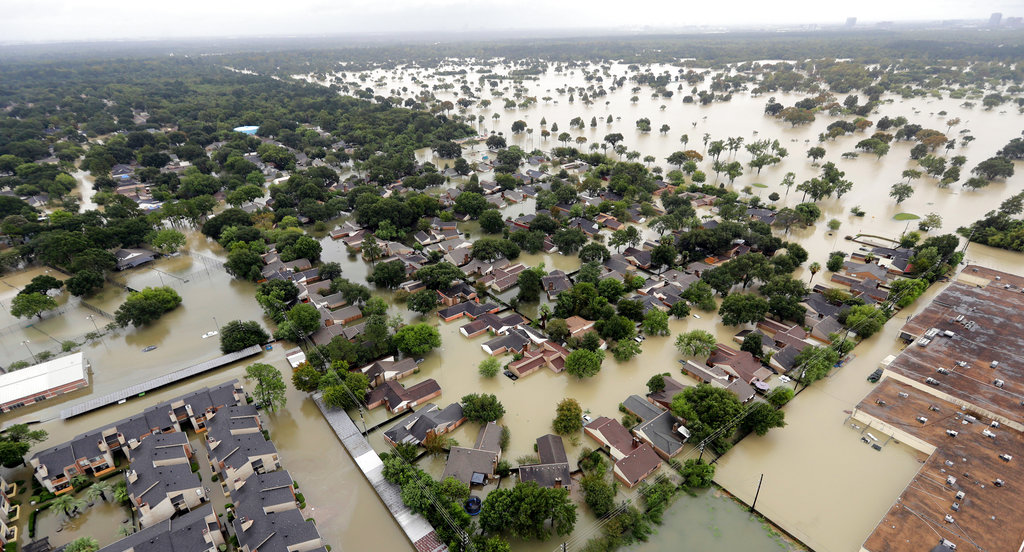
Climate change is increasing the frequency and ferocity of storms, wildfires and other disasters in the U.S. Scattered academic studies have shown the rates of intimate partner violence rise in the wake of these disasters.
But the investigation found that a complete understanding of the impact of natural disasters on intimate partner violence isn't possible in the U.S. because there is no comprehensive national database nor standardized emergency call data detailed enough to quantify it. Only a fraction of police departments publish their 911 calls online.
The team of journalists gathered and analyzed data attached to individual disasters across the U.S., including Winter Storm Uri in Texas (2021), Hurricane Harvey in Texas (2017) and Hurricane Katrina in Louisiana (2005). The data — and anecdotal evidence from interviews with people who work at crisis centers — supported the available research, including a 2024 study from the National Academies of Sciences, Engineering, and Medicine.
“The degree of difficulty for this project was high,” Howard Center Director Kathy Best said. “Not only did Lisa and Greg have to put together their own data, they also had to identify people who faced intimate partner violence during a disaster and convince them to share their stories.”
The Fuller Project, after publishing a story on the impact of climate change on domestic violence globally, wanted to use data to take a similar look at what was happening in the United States, and contacted the Howard Center in early 2023 to launch a collaboration.
Morton focused on collecting data and Woelfl focused on research and reporting. Howard Fellow Abby Wallace also contributed research for the project. Klein worked on the project for The Fuller Project.
Because of the lack of national data, Morton and Woelfl collect their own by identifying open data sources to use and filing public information requests for police calls, court records and other documents.
They scoured scientific studies, many using different methodologies, to find relevant information on increases in intimate partner violence in the wake of hurricanes, snowstorms, wildfires and floods. And they interviewed people working in shelters across the U.S. about their experiences on the ground after disasters happen.
“The Fuller Project was delighted to work with journalists from the Howard Center on this important project,” said Jodi Enda, Washington bureau chief and senior correspondent at The Fuller Project. “They worked tirelessly to identify and analyze data, anecdotal evidence and personal stories that showed how natural disasters raise the risk of intimate partner violence.”
About the Howard Center
The Howard Center for Investigative Journalism, launched in 2019 and funded by the Scripps Howard Fund, gives Merrill College students the opportunity to work with news organizations across the country to report stories of national or international importance to the public.
The multidisciplinary program is focused on training the next generation of reporters through hands-on investigative journalism projects. Students will learn to dive deep into data, ask tough questions of those in power and tell the stories they uncover in new and compelling ways.
For more information, contact:
Josh Land
joshland@umd.edu
301-405-1321